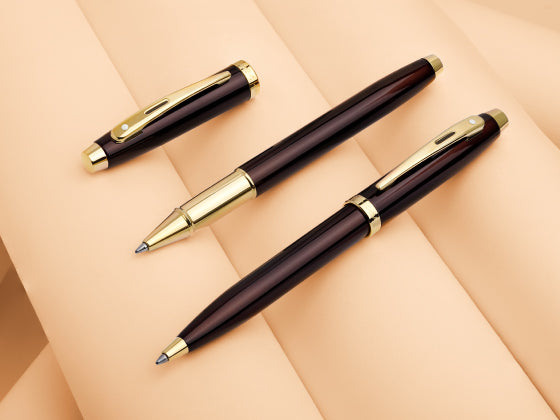

A century of design, innovation, and the art of writing, refined with time.

In a world that moves faster with every passing decade, few creations have aged with such grace as a Sheaffer pen. Some creations do more than serve a purpose; they carry time within them. Since 1913, Sheaffer has evolved alongside changing generations, technologies, and preferences, while staying true to one belief: writing deserves intention, craftsmanship, and care. From early vintage fountain pens to today’s refined modern designs, Sheaffer’s journey has never been about replacing the past, but about perfecting it.
The story of Sheaffer began not in a factory, but in a small jewellery shop in Fort Madison, Iowa, where Walter A. Sheaffer worked with delicate tools and precise materials. At a time when filling a fountain pen was messy and inconvenient, he introduced the lever filling mechanism, which was clean, efficient, and reliable. Early Sheaffer pens were crafted from hard rubber and designed with smooth silhouettes and practical proportions. They were understated, functional, and built to last.
When Design Found Its Balance

By the 1920s, Sheaffer brought colour and confidence into its designs. Celluloid bodies replaced hard rubber, allowing rich finishes such as jade green and pearl marbles. In 1924, the White Dot made its first appearance, a small mark with a powerful promise of quality and reliability that continues to define Sheaffer today.
As writing became more personal, Sheaffer pens became more expressive. The Balance pen, introduced at the end of the 1920s, changed how a pen felt in the hand. Its streamlined and ergonomic shape followed the natural movement of writing, creating a design language that was balanced, intentional, and comfortable. This approach continues to influence modern Sheaffer collections.
A Golden Era of Innovation

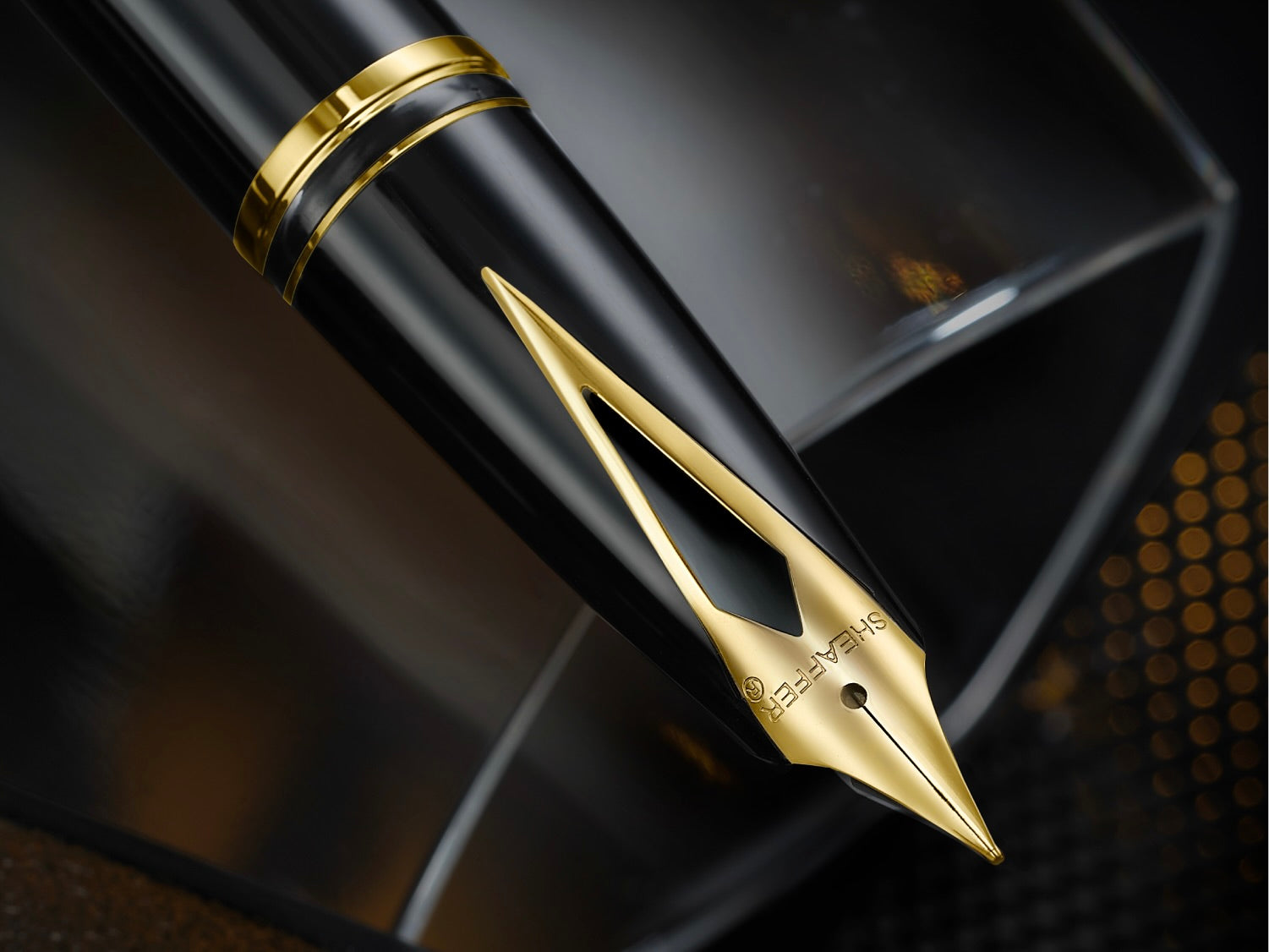
Through the 1930s and 1940s, Sheaffer refined both form and function. Innovations such as the Feathertouch nib and the wrap-around Triumph nib improved smoothness and durability. Gold nibs, often crafted in 14K gold, became central to Sheaffer’s premium identity, blending performance with quiet luxury.
The 1950s marked a defining chapter. The Snorkel filling system eliminated the need to dip the nib into ink, showcasing Sheaffer’s engineering excellence. Soon after, the Lady Sheaffer introduced slim, elegant designs, while the PFM (Pen For Men) unveiled one of Sheaffer’s most iconic features — the inlaid nib. Seamlessly embedded into the grip section, this gold nib remains one of the brand’s most recognisable design elements.
Evolving With the Modern World

As communication became faster, Sheaffer evolved without losing its essence. Writing instruments adapted to modern lifestyles. Cartridge systems made everyday use more convenient, profiles grew slimmer, and finishes became more contemporary. This shift is reflected in today’s collections, where design meets personality and purpose.
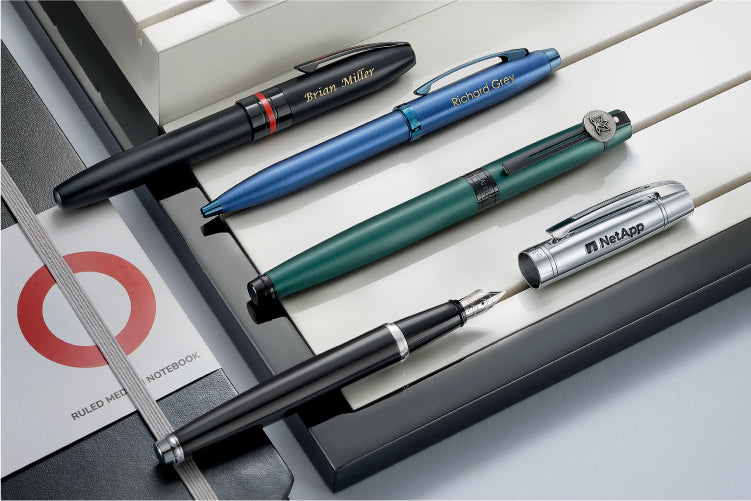
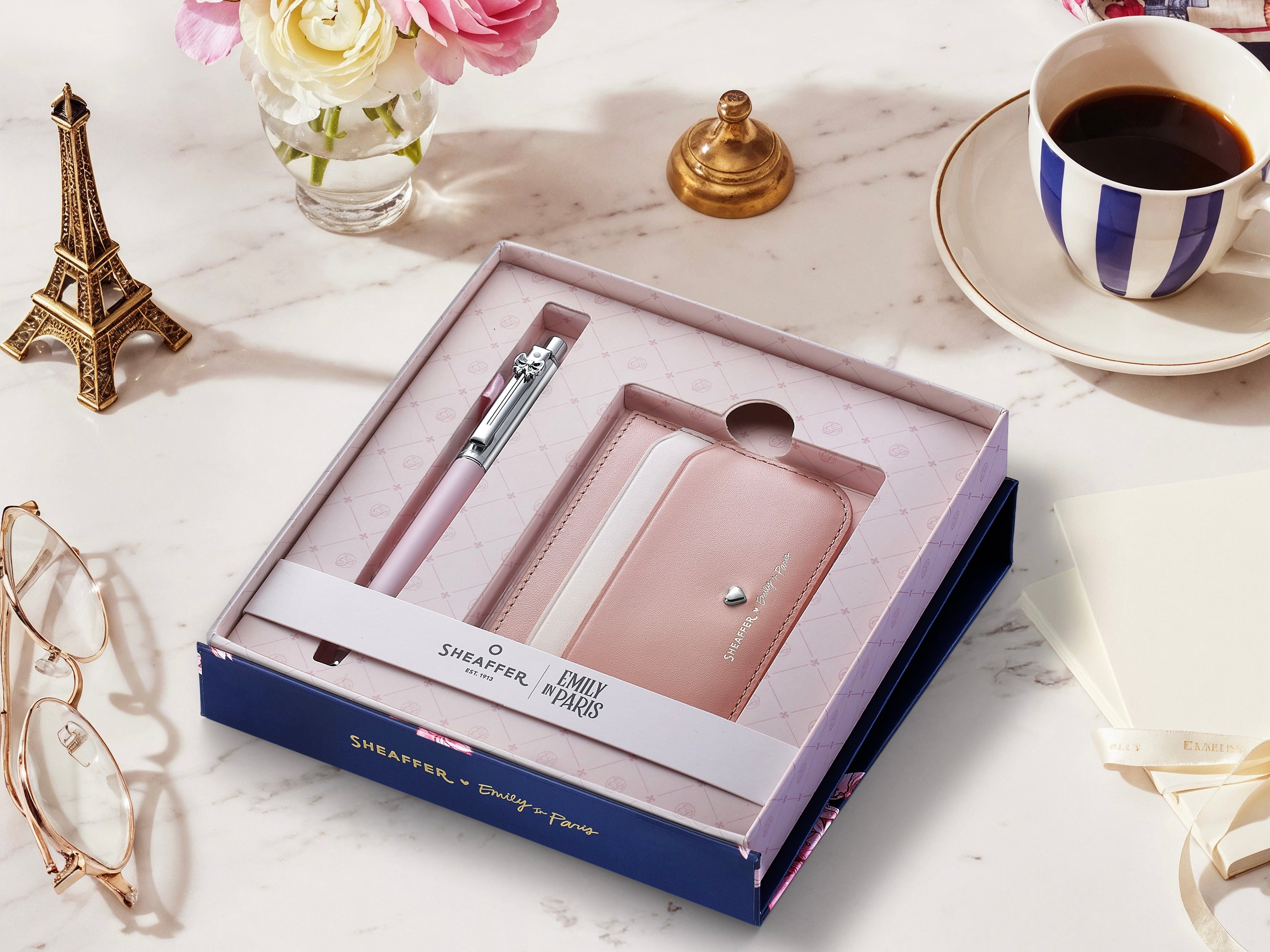
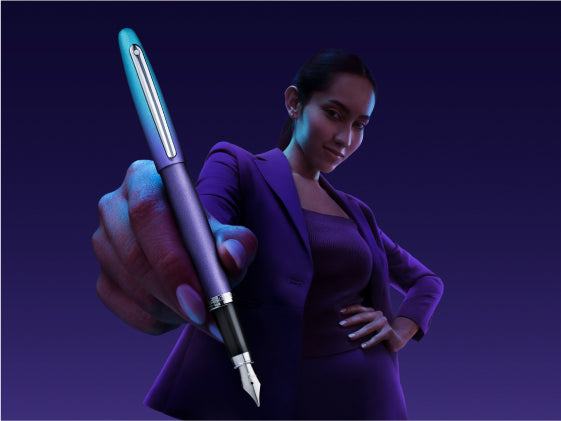
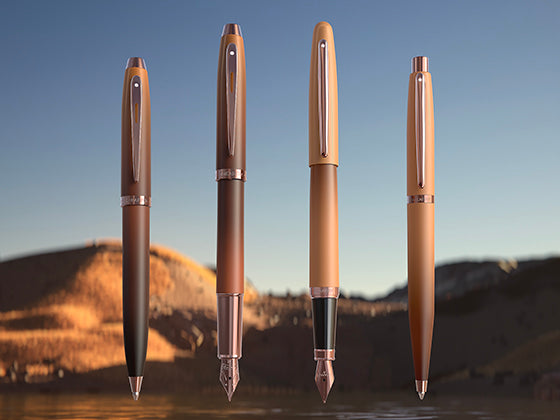
The Expressions collection brings colour and individuality to modern writing, while the Coffee Edition adds warmth and character through rich, tactile finishes inspired by everyday rituals. Collaborations like Emily in Paris introduce a fresh, fashion-led perspective, blending cultural influence with refined design. At the same time, the Legacy collection continues to reinterpret classic Sheaffer silhouettes and the iconic inlaid nib for today’s writer.
Timeless, By Design
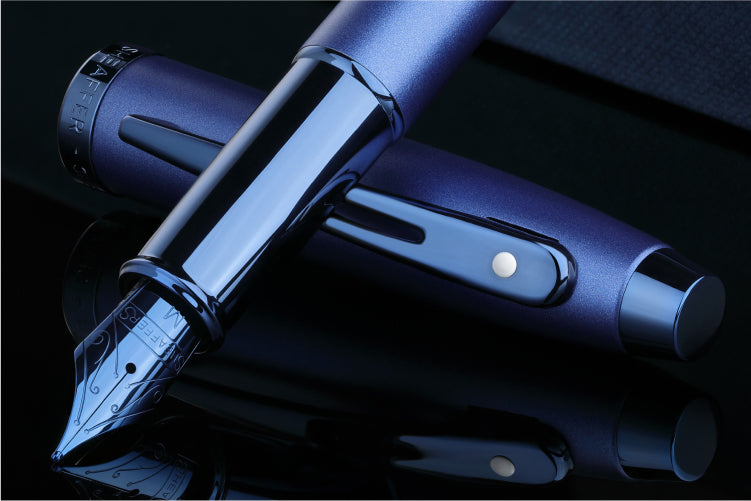
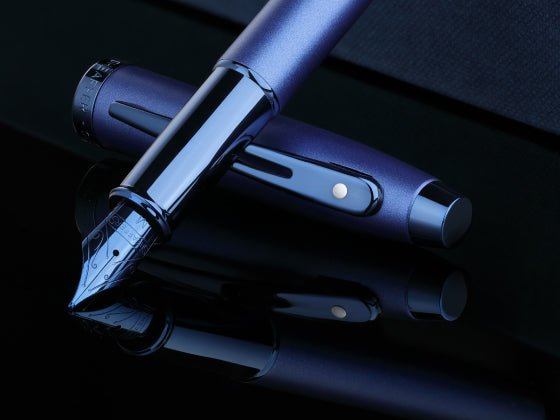
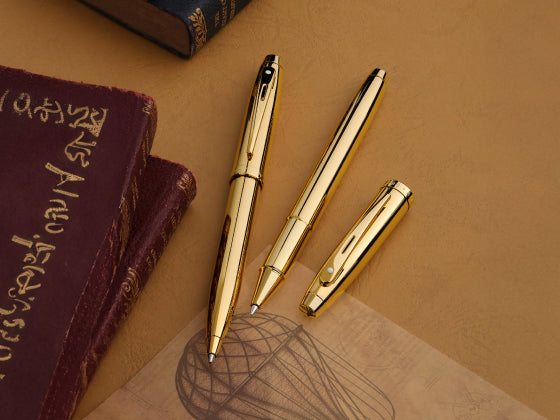
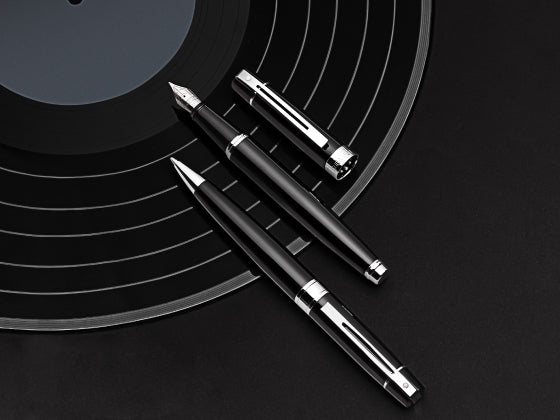
Today, Sheaffer pens reflect a quieter confidence. Lacquered finishes, metal constructions, reliable nibs, and contemporary colour palettes define the present, while the foundations remain unchanged. Fountain pens remain at the heart of the brand. Gold nibs continue to define writing quality. The White Dot still signals trust; the story of Sheaffer is not vintage versus modern, it is a story of continuity. Each era builds upon the last, shaping pens crafted not just to write, but to last.